
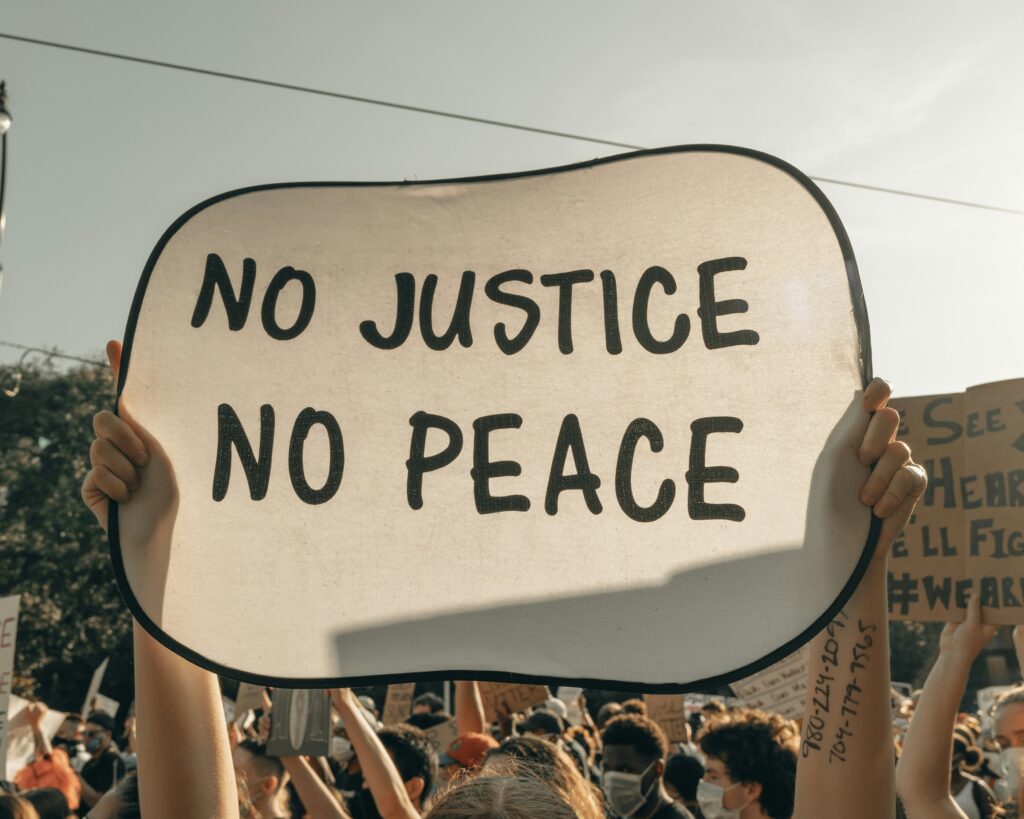
There was a time when the slightest perceived unfairness towards an innocent or myself would set me off. I’d lose my cool, then spiral into shame for not handling the situation more maturely. I envied people who could stay calm, composed, and seemingly detached when faced with unfairness. Why couldn’t I be more like them? Why did everything that felt wrong have to become my fight? With time (and several cringeworthy stories), I realized the truth: I wasn’t just fighting for fairness; I was fighting against something much deeper. Beneath every flare of indignation was a small, unhealed part of me that couldn’t tolerate being unseen, unheard, or dismissed. Once the understanding dawned on me, I worked on how to handle myself better and not get perturbed so easily. In this week’s blog, I share how I got to the point where I could still show up for others and myself without feeling like I’d lost too much in the process.
Some years ago, I had an epiphany that my reactive behavior was a result of taking things personally. This was especially true in circumstances where I felt invisible. Like the time I was at the Apple store to get my phone repaired. The incident itself was so minor and yet, somehow, monumental that it has stuck with me. I’d been waiting in line to get my phone looked at when another customer casually walked up and cut right in front of me. To him, it might have been an innocent mistake. But to me, it felt like a blatant act of disrespect. Worse, the employee assisting him could clearly see I’d been waiting for a while but still said nothing.
My blood started to boil. I wasn’t just angry; I was hurt. I wanted the employee to see me, acknowledge the unfairness, and restore the “justice” of the situation. When that didn’t happen, I snapped. I raised my voice, asking if there was any purpose to the line at all. My tone was sharp, accusatory, and entirely disproportionate to the event.
The situation escalated between the other customer and me and only calmed down when the Apple employee threatened to kick both of us out of the store. I can’t recall if I waited around to get my issue resolved, but I do remember feeling deeply ashamed of my behavior. I sat in my car and sobbed trying to understand what had come over me. There were other emotional stressors at play, but that was no excuse for such behavior.
These over-the-top reactions of mine didn’t happen constantly, but they occurred often enough where I wondered whether I was actually fighting unfairness or some demons within me. In reality, majority of the time, I was feeling personally affronted, because my reaction was of someone deeply offended instead of someone trying to stand up for what was right.
It took years of healing to understand that I wasn’t fighting every injustice, but I was fighting every memory of being dismissed, unheard, or made to feel small. The Apple store employee wasn’t the enemy. He had unknowingly stepped into a much older story, one where my younger self had been told, “Your feelings don’t matter.”
When we haven’t healed those wounds, every slight, big or small, feels like a fresh betrayal. We don’t just see the unfairness of the situation; we become it. We react to the old pain, not the current event. Our nervous system goes into survival mode, demanding recognition, validation, or control.
And the sad truth of the matter is that it’s exhausting. Not every moment of unfairness deserves our full emotional arsenal. Not every person needs to be corrected or educated. Not every battle needs a warrior.
As I came to accept, appreciate and love myself, my behavior changed. It’s not that I stopped standing up for what felt unfair to me, but I stopped doing it in a way that made me question it. I still have moments where I default to my reactionary ways. Only recently, when I was traveling on a flight with my husband, a situation unfolded with another passenger that rubbed me the wrong way. My mind immediately wrote the worst possible story about his intentions. I didn’t handle it gracefully; in fact, I got defensive and agitated. Part of me probably wasn’t wrong, but I also didn’t behave in alignment with my values. On such occasions, I reflect honestly and give myself another chance.
I’ve also learned that not everything needs my input, correction, or outrage.
If someone cuts me off in traffic, I let it go unless there’s danger. If someone is rude in a store, I decide whether it’s worth speaking up or simply walking away. If a family member is perpetually unreasonable, then I love them from a distance.
Because here’s the truth: my energy, attention, and peace are finite. Every time I choose to fight something trivial, I’m taking that energy away from what truly matters, like my work, my loved ones, my healing, my chance to actually make a difference, and my sanity. I’m not here to save mankind, especially if I can’t save myself first by changing myself for the better; seeing where I need to right the wrongs I’ve done; and forgiving others’ inconsequential transgressions because everyone has something going on.
My goal isn’t silence or indifference; it’s discernment. It’s knowing when to speak up with clarity and dignity, and when to preserve my peace. When my reaction strips me of my own dignity, it stops being about justice and starts being about my ego. If my delivery is cruel, mocking, or reactive, even the most valid message will fall on deaf ears. Nevertheless, if I can express myself calmly and clearly, my point has a chance to land with weight.
Sometimes, I even walk away when I know I might say or do something that won’t feel good afterward. Not because I am weak, but because I am learning that nothing good ever comes from being at war with my own nervous system.
In the past, my overactive moral compass rerouted me toward every battle, every argument, every “how dare they” situation. Now, it mostly pauses and questions what’s the next best step. That next step requires a step back where I confront my own insecurities, so I can be intentional about what I choose to do.
These are my personal views, and I’m not recommending silence or ignorance all the time. Trust me, if someone physically assaulted me, I would not take it lying down, because that, for me, would be an undignified response. All I’m saying is that a choice is always available to you and which one you make dictates its impact.
If you’re someone who feels deeply and can’t stand unfairness, who feels invisible when others cross boundaries, who reacts before you can think, then please know that I see you. I was you. You’re not crazy, overreactive, or “too much.” You’re likely someone who’s been unseen for too long and has learned to shout instead of speak. Regardless, I do request you to ask yourself if your response honors your peace. You’ll still get angry, and you’ll still care, but you’ll stop bleeding for every cause that doesn’t deserve your blood.
Sometimes, the bravest thing you can do is to walk away with your head held high and let your silence become your protest, because you can’t heal the world by wounding yourself.
Side note: the next time you’re in line at the Apple store, maybe let the guy cut in. Who knows, maybe his phone’s been acting up since 2015, and he’s fighting his own battles too 😊
As always, I am here to support you all the way. I hope you keep in touch with your stories, thoughts, and feedback. If you wish to learn more, please stop by www.imperfectbodies.com. Lastly, if you enjoyed this information, then please share it with others.
**NEW**My 5-minute guide for when you’re feeling overwhelmed, stuck, or lost. Reset your energy and reconnect with yourself. Bonus audio guide included. Available here: Energy Guide
All the best,
Chaitni